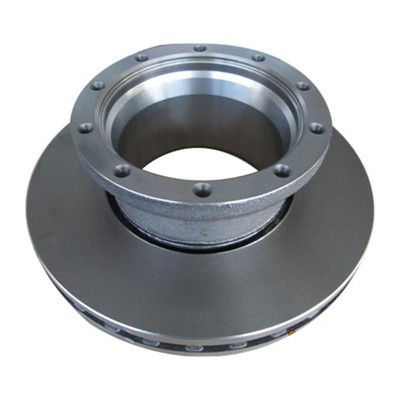
Hey there, fellow car enthusiasts! As a supplier of Volvo Brake Discs, I've been getting a ton of questions lately about whether the new Volvo brake discs have better stopping power than the old ones. So, I thought I'd dive deep into this topic and share some insights based on my experience in the industry.
Let's start by understanding the basics of how brake discs work. When you press the brake pedal in your car, the brake calipers squeeze the brake pads against the brake discs. This friction between the pads and the discs slows down the rotation of the wheels, ultimately bringing your car to a stop. The efficiency of this process depends on several factors, including the material of the brake discs, their design, and the overall braking system of the vehicle.

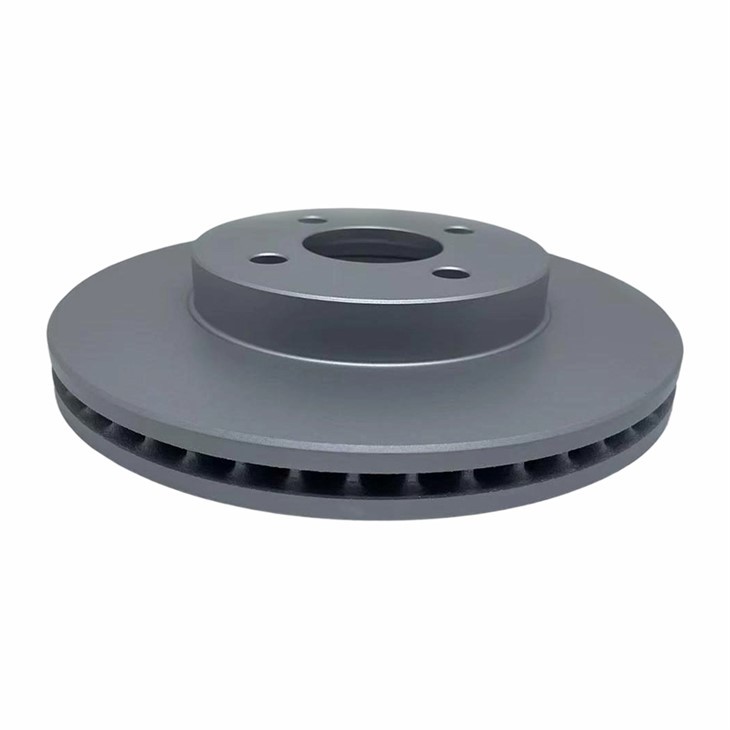
In the past, Volvo used traditional cast - iron brake discs. These were reliable and did the job well for many years. Cast - iron discs are relatively inexpensive to produce, and they have good heat dissipation properties. However, they do have some limitations. Over time, cast - iron discs can wear out, develop cracks, and lose their effectiveness, especially under heavy use.
The new Volvo brake discs, on the other hand, are often made from advanced materials and feature innovative designs. For example, some of the newer models use carbon - ceramic brake discs. These discs are much lighter than their cast - iron counterparts, which reduces the unsprung weight of the vehicle. A lower unsprung weight means better handling and a more responsive braking system.
Carbon - ceramic brake discs also have excellent heat resistance. When you brake hard, a lot of heat is generated. If the brake discs can't dissipate this heat quickly, the braking performance can degrade, a phenomenon known as brake fade. Carbon - ceramic discs can withstand much higher temperatures without losing their braking power, which means they can provide consistent stopping performance even under extreme conditions.
Another advantage of the new Volvo brake discs is their design. Modern brake discs often have a slotted or drilled design. Slots help to clear away debris and gases that can build up between the brake pads and the discs during braking. This improves the friction between the pads and the discs, resulting in better stopping power. Drilled holes, on the other hand, also aid in heat dissipation and can prevent the formation of a layer of gas between the pads and the discs, which can reduce friction.
Let's talk about some real - world scenarios. If you're driving a Volvo on a regular basis, say for your daily commute, the difference between the old and new brake discs might not be that noticeable. However, if you're an enthusiast who likes to take your car on the track or drive aggressively, the new brake discs will make a world of difference. You'll notice that the car stops more quickly and more predictably, giving you more confidence behind the wheel.
Now, let's compare Volvo brake discs with those of other brands. Take Ford Brake Discs for example. Ford also offers a range of brake discs, from standard cast - iron to high - performance options. However, the new Volvo brake discs, especially the carbon - ceramic ones, have an edge in terms of weight and heat resistance. Ford's high - performance brake discs are great, but they may not offer the same level of lightweight construction and extreme heat tolerance as Volvo's latest offerings.
Toyota Floating Carbon BrakeDiscs are another interesting comparison. Toyota's floating carbon brake discs are designed for high - performance vehicles. They share some similarities with Volvo's carbon - ceramic discs, such as light weight and good heat resistance. However, Volvo has its own unique engineering and design approach, which may result in different braking characteristics. Volvo's focus on safety and performance means that their brake discs are tuned to provide optimal stopping power while maintaining a high level of reliability.
BMW Brake Disc is also a well - known brand in the automotive industry. BMW offers a variety of brake disc options, from basic to high - end. While BMW's brake discs are of high quality, Volvo's new brake discs have a distinct advantage in terms of the balance between weight reduction and stopping power. Volvo has been able to achieve a great combination of these two factors, which is crucial for overall vehicle performance.
So, to answer the question, yes, Volvo brake discs do have better stopping power than the old ones. The use of advanced materials, innovative designs, and the latest engineering techniques have all contributed to this improvement. Whether you're a casual driver or a performance enthusiast, upgrading to the new Volvo brake discs can enhance your driving experience and keep you safer on the road.
If you're interested in purchasing Volvo brake discs or have any questions about our products, feel free to reach out. We're here to help you find the best brake discs for your Volvo. Whether you need a replacement for your old brake discs or want to upgrade to the latest high - performance options, we've got you covered.
References:
- Automotive Engineering Handbook
- Car and Driver Magazine
- Various Volvo technical manuals