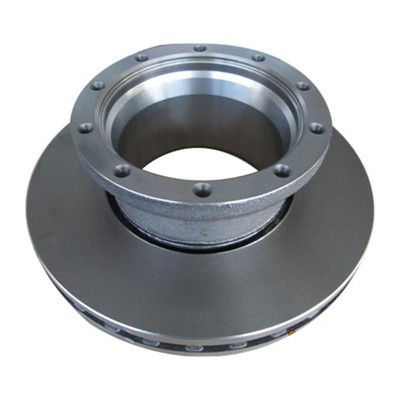
When it comes to the installation of Volvo brake discs, one question that frequently arises among vehicle owners and automotive enthusiasts is whether these brake discs need to be bedded in after installation. As a trusted supplier of Volvo Brake Discs, I am here to provide you with a comprehensive answer based on scientific knowledge and industry experience.
Understanding the Bedding - in Process
Bedding in, also known as break - in, is a crucial process for brake discs and pads. It involves gradually wearing in the friction surfaces of the brake pads and discs to create an optimal contact pattern and transfer a thin layer of pad material onto the disc surface. This process helps to improve braking performance, reduce noise, and extend the lifespan of both the brake pads and discs.


During normal braking, the brake pads press against the brake discs, generating friction that slows down the vehicle. However, when new brake discs and pads are installed, their surfaces are smooth and may not have the ideal contact pattern. Bedding in allows the pads to conform to the shape of the discs and deposit a uniform layer of friction material on the disc surface. This layer, known as the transfer film, enhances the coefficient of friction between the pads and discs, resulting in more efficient braking.
Do Volvo Brake Discs Need Bedding In?
The short answer is yes. Volvo brake discs, like brake discs from other manufacturers, benefit significantly from the bedding - in process. Volvo vehicles are engineered to provide high - performance braking, and proper bedding in of the brake discs is essential to achieve the best possible braking performance.
When you install new Volvo brake discs, the initial braking performance may not be at its peak. The smooth surfaces of the new discs and pads may not generate enough friction, leading to longer stopping distances and a less responsive braking feel. By bedding in the brake discs, you can ensure that the braking system reaches its optimal performance level as quickly as possible.
Moreover, bedding in helps to prevent uneven wear on the brake discs and pads. Uneven wear can cause vibrations, noise, and reduced braking efficiency over time. By creating a uniform transfer film on the disc surface, the bedding - in process promotes even wear, which extends the lifespan of the braking components and reduces the likelihood of costly repairs.
The Bedding - in Procedure for Volvo Brake Discs
The bedding - in procedure for Volvo brake discs is relatively straightforward, but it requires careful attention to detail. Here is a general guideline on how to bed in your Volvo brake discs:
- Initial Driving: After installing the new brake discs, drive your vehicle at a moderate speed for the first few miles without applying the brakes aggressively. This allows the brake components to warm up gradually and helps to seat the pads properly against the discs.
- Moderate Braking: Once the brakes are warm, perform a series of moderate braking maneuvers. Accelerate to a speed of around 30 - 40 mph and then apply the brakes firmly but smoothly to slow down to about 10 - 15 mph. Repeat this process 10 - 15 times, allowing the brakes to cool down for a few minutes between each braking cycle.
- High - Speed Braking (Optional): For more high - performance Volvo models, you may want to perform a few high - speed braking maneuvers after the initial moderate braking. Accelerate to a speed of around 60 - 70 mph and then apply the brakes firmly to slow down to a complete stop. Repeat this process 3 - 4 times, again allowing the brakes to cool down between each cycle.
- Final Cooling: After completing the bedding - in process, drive your vehicle at a normal speed for a few more miles to allow the brakes to cool down completely. Avoid heavy braking during this time.
It is important to note that the specific bedding - in procedure may vary depending on the model and year of your Volvo vehicle. Always refer to your vehicle's owner's manual for the manufacturer's recommended bedding - in procedure.
Comparing with Other Brands
When considering brake discs, it's also interesting to look at how Volvo brake discs stack up against those from other well - known brands. For example, Mercedes - Benz Brake Disc, AUDI Brake Disc, and BMW Brake Disc all have their own characteristics.
Mercedes - Benz brake discs are often associated with luxury and high - end performance. They are designed to provide smooth and reliable braking in a variety of driving conditions. Audi brake discs, on the other hand, are engineered to complement the sporty nature of Audi vehicles, offering precise and responsive braking. BMW brake discs are known for their high - performance capabilities, especially in BMW's performance - oriented models.
While each brand has its unique features, the importance of bedding in the brake discs remains the same across the board. Whether you drive a Volvo, a Mercedes - Benz, an Audi, or a BMW, proper bedding in is essential for optimal braking performance.
Conclusion and Call to Action
In conclusion, bedding in Volvo brake discs is a necessary step after installation. It helps to improve braking performance, reduce noise, and extend the lifespan of the braking components. As a supplier of Volvo Brake Discs, we are committed to providing high - quality products and ensuring that our customers have the knowledge they need to maintain their vehicles' braking systems.
If you are in the market for Volvo brake discs or have any questions about the bedding - in process, we encourage you to reach out to us. Our team of experts is ready to assist you with your purchase and provide you with all the information you need. Whether you are a professional mechanic or a DIY enthusiast, we can help you find the right brake discs for your Volvo vehicle.
References
- "Automotive Brake Systems: Fundamentals, Diagnosis, and Service" by James D. Halderman
- Volvo vehicle owner's manuals