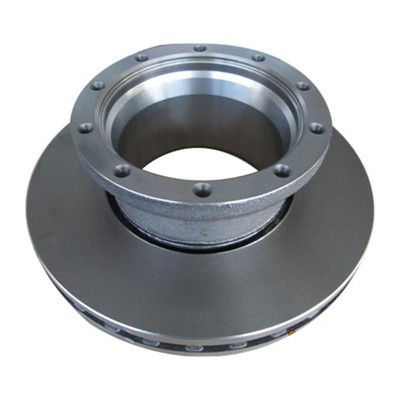
Hey there, fellow car enthusiasts! As a supplier of BMW brake discs, I've got a ton of insights to share about how these bad boys handle high - speed braking. Let's dive right in!
The Basics of High - Speed Braking
First off, we need to understand what high - speed braking actually means. When you're cruising on the highway at speeds of 70, 80, or even 100 miles per hour, and suddenly you need to stop, that's high - speed braking. It's not like your everyday stop at a red light. At high speeds, there's a whole lot more kinetic energy that needs to be dissipated.
Kinetic energy is proportional to the square of the velocity. So, if you double your speed, the kinetic energy goes up by a factor of four. That means when you're braking from high speeds, your brake discs have to work four times as hard compared to braking at half that speed. Crazy, right?
How BMW Brake Discs Are Designed for High - Speed Braking
BMW is known for its engineering excellence, and their brake discs are no exception. These discs are designed with several features that make them super effective at high - speed braking.
Material Matters
The material used in BMW brake discs is crucial. Most of them are made from high - quality cast iron. Cast iron is great because it has good heat - dissipation properties. When you're braking at high speeds, a huge amount of heat is generated. If the brake discs can't get rid of this heat quickly, they can overheat, which leads to a loss of braking performance, a phenomenon known as brake fade.
Some BMW models, especially the high - performance ones, use carbon - ceramic brake discs. These are even better at handling heat. Carbon - ceramic discs can withstand much higher temperatures than cast - iron discs. They also weigh less, which is a big plus as it reduces the unsprung weight of the vehicle. Less unsprung weight means better handling and a smoother ride.
Ventilation Design
Another key feature of BMW brake discs is their ventilation design. Most of these discs are ventilated, which means they have channels or vanes between the two friction surfaces. These channels allow air to flow through the disc, carrying away the heat generated during braking.


The ventilation design in BMW brake discs is carefully engineered. The shape and size of the channels are optimized to maximize the airflow. This ensures that the brake discs stay cool even during repeated high - speed stops.
Friction Surface
The friction surface of BMW brake discs is also designed for high - speed braking. The surface is machined to a very precise finish. This allows for a consistent and predictable friction coefficient. When you press the brake pedal at high speeds, you need the brakes to respond in a smooth and controlled manner. A consistent friction coefficient ensures that the braking force is evenly distributed across the brake pads and the disc, providing a stable and reliable braking experience.
Performance in Real - World High - Speed Braking Scenarios
Let's talk about how BMW brake discs perform in real - world situations. I've heard countless stories from BMW owners about how their brakes have saved them in emergency high - speed braking situations.
For example, imagine you're on a highway, and the car in front of you suddenly slams on its brakes. You have to react quickly and hit the brakes hard. With BMW brake discs, you can count on them to bring your car to a stop in a relatively short distance. The high - quality materials and the well - designed ventilation system ensure that the brakes don't fade, even if you have to make multiple hard stops in a row.
In high - performance driving, like on a race track, BMW brake discs really shine. Drivers can push their cars to the limit, knowing that the brakes will perform consistently. The carbon - ceramic brake discs, in particular, are a favorite among track enthusiasts. They can handle the extreme heat generated during high - speed cornering and braking without any loss of performance.
Comparing with Other Brands
It's always interesting to compare BMW brake discs with those of other brands. For instance, Chevy Brake Discs are also well - made, but they have a different design philosophy. Chevy brake discs are often more focused on durability and cost - effectiveness. They are great for everyday driving, but they might not be as optimized for high - speed braking as BMW discs.
On the other hand, Mercedes - Benz Brake Disc and Mercedes Brake Disc are also high - quality products. Mercedes and BMW are both luxury car manufacturers, and their brake discs share some similarities in terms of design and performance. However, each brand has its own unique approach. BMW brake discs are often praised for their sporty performance and responsiveness, while Mercedes brake discs are known for their smooth and refined braking feel.
Why Choose Our BMW Brake Discs
As a supplier of BMW brake discs, I can tell you that our products are top - notch. We source the best materials and use the latest manufacturing techniques to ensure that our brake discs meet or exceed the original equipment manufacturer (OEM) standards.
Our brake discs are rigorously tested in various conditions. We test them for heat - dissipation, braking performance, and durability. This means that when you buy our BMW brake discs, you can be confident that you're getting a product that will perform flawlessly, even in the most demanding high - speed braking situations.
We also offer a wide range of brake discs to suit different BMW models and driving styles. Whether you have a daily driver or a high - performance BMW, we have the right brake discs for you.
Let's Talk Business
If you're in the market for BMW brake discs, I'd love to have a chat with you. Whether you're a car enthusiast looking to upgrade your brakes, a mechanic in need of high - quality replacement parts, or a dealership looking for a reliable supplier, we've got you covered. Reach out to us, and we can discuss your specific needs and find the perfect brake discs for you.
References
- Bosch Automotive Handbook, 8th Edition
- SAE International's papers on automotive braking systems
- BMW's official technical documentation on brake systems