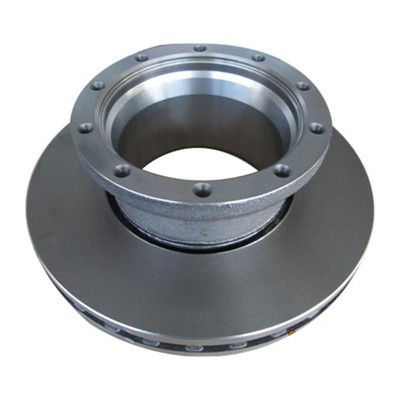
How do brake discs work in a disc - brake system?
As a seasoned brake disc supplier, I've witnessed firsthand the crucial role brake discs play in the overall safety and performance of a vehicle's braking system. In this blog, I'll delve into the inner workings of brake discs in a disc - brake system, shedding light on their functionality, types, and importance.
The Basics of a Disc - Brake System
A disc - brake system is a fundamental component of modern vehicles, designed to slow down or stop the vehicle's motion. It consists of several key parts: the brake disc (also known as a brake rotor), brake pads, calipers, and brake lines. The brake disc is a flat, circular metal component that is attached to the wheel hub. When the driver presses the brake pedal, hydraulic pressure is generated in the brake lines. This pressure forces the calipers to squeeze the brake pads against the brake disc.
How Brake Discs Work
The working principle of brake discs is based on the conversion of kinetic energy into thermal energy. When a vehicle is in motion, it possesses kinetic energy. To slow down or stop the vehicle, this kinetic energy needs to be dissipated. When the brake pads are pressed against the rotating brake disc, friction is generated between the two surfaces. This friction resists the rotation of the brake disc, which in turn slows down the rotation of the wheels.


As the brake pads rub against the brake disc, the kinetic energy of the moving vehicle is converted into heat energy. The brake disc's surface heats up rapidly due to this friction. The heat is then dissipated into the surrounding air through the ventilation channels or cooling fins on the brake disc. This process of heat dissipation is crucial because excessive heat can cause the brake pads and discs to wear out more quickly, and in extreme cases, it can lead to brake fade, where the braking performance is significantly reduced.
Types of Brake Discs
There are several types of brake discs available in the market, each with its own unique features and applications.
Solid Brake Discs: These are the most basic type of brake discs. They are made of a single piece of solid metal, usually cast iron. Solid brake discs are simple in design and relatively inexpensive. They are commonly used in small cars and light - duty vehicles where the braking requirements are not extremely high.
Vented Brake Discs: Vented brake discs have ventilation channels or vanes between the two friction surfaces. These channels allow air to flow through the disc, which helps in better heat dissipation. Vented brake discs are more effective at cooling compared to solid brake discs, making them suitable for vehicles that require more frequent or heavy braking, such as sports cars, SUVs, and trucks.
Drilled Brake Discs: Drilled brake discs have holes drilled through the friction surface. These holes serve multiple purposes. Firstly, they help in reducing the weight of the brake disc, which can improve the vehicle's performance. Secondly, the holes allow water, dust, and gas to escape from the braking surface, which helps in maintaining consistent braking performance in wet or dirty conditions. However, drilled brake discs are more prone to cracking under heavy use, so they are often used in combination with slotted brake discs.
Slotted Brake Discs: Slotted brake discs have slots machined into the friction surface. These slots help in removing the gas and debris that build up between the brake pads and the disc during braking. They also provide a fresh surface for the brake pads to grip, which can improve the initial bite of the brakes. Slotted brake discs are commonly used in high - performance vehicles and racing cars.
Importance of Quality Brake Discs
As a brake disc supplier, I understand the importance of providing high - quality brake discs. A well - made brake disc can significantly enhance the safety and performance of a vehicle's braking system.
Safety: The primary function of a brake disc is to ensure the safety of the vehicle's occupants. A high - quality brake disc can provide reliable and consistent braking performance, even under extreme conditions. It can resist wear and tear, reducing the risk of brake failure.
Performance: A good brake disc can improve the overall performance of the vehicle. It can reduce the braking distance, allowing the vehicle to stop more quickly. This is especially important in emergency situations. Additionally, a well - ventilated brake disc can prevent brake fade, ensuring that the brakes maintain their effectiveness even during prolonged or heavy use.
Durability: Quality brake discs are made from high - grade materials and are manufactured using advanced processes. This makes them more durable and resistant to corrosion. A durable brake disc can last longer, reducing the need for frequent replacements and saving the vehicle owner money in the long run.
Our Product Range
At our company, we offer a wide range of brake discs to meet the diverse needs of our customers. Whether you are looking for Toyota Brake Disc for your Toyota vehicle or heavy - duty brake discs for a commercial truck, we have the right product for you. We also supply DACIA Brake Pads and Heavy Duty Truck Brake Pads to complement our brake disc offerings.
Our brake discs are made from high - quality materials and are rigorously tested to ensure they meet or exceed industry standards. We use advanced manufacturing techniques to produce brake discs with precise dimensions and smooth surfaces, which ensures optimal braking performance.
Contact Us for Procurement
If you are in the market for high - quality brake discs or related products, we invite you to contact us for procurement. Our team of experts is ready to assist you in selecting the right brake discs for your specific needs. We offer competitive prices, excellent customer service, and fast delivery. Whether you are a car dealership, a repair shop, or an individual vehicle owner, we can provide you with the best braking solutions.
References
- Bosch Automotive Handbook, 7th Edition
- SAE International Journal of Passenger Cars - Mechanical Systems
- Chilton's Auto Repair Manuals