Hey there, car enthusiasts! As a supplier of top - notch car brake shoes, I'm stoked to dive into how these little wonders work in a parking brake system.
Let's start with the basics. The parking brake, also known as the handbrake or emergency brake, is a crucial part of your vehicle. It's not just for keeping your car still when parked on a slope; it can also be a lifesaver in case your main braking system fails. And at the heart of this system are the brake shoes.
What Are Brake Shoes?
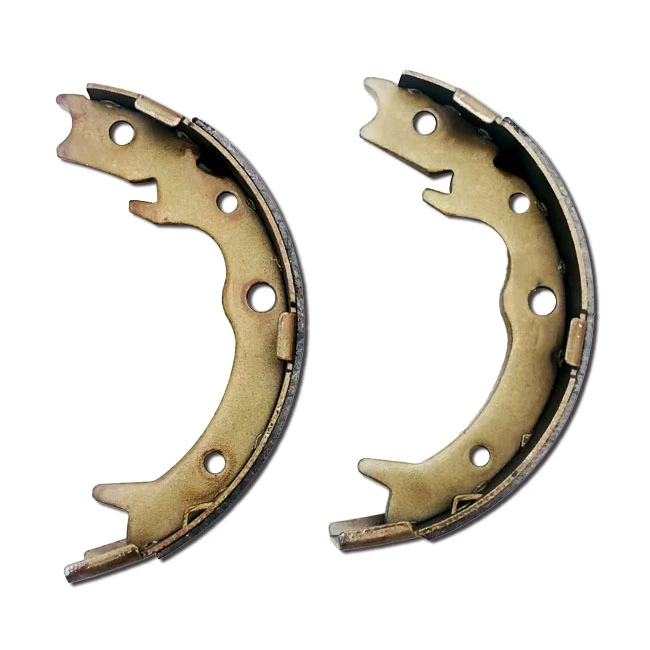
Brake shoes are curved metal pieces lined with a friction material. They're typically found inside the brake drum, which is a round, metal housing attached to the wheel. When you engage the parking brake, the brake shoes are forced outwards against the inner surface of the brake drum. This creates friction, which in turn slows down and stops the rotation of the wheel.
The Anatomy of a Parking Brake System
A typical parking brake system has a few key components. First, there's the handbrake lever or pedal inside the car. When you pull the lever or press the pedal, it activates a cable. This cable runs from the lever or pedal to the rear wheels, where it connects to the brake shoe assembly.
The brake shoe assembly consists of two brake shoes, a backing plate, and a set of springs and pins. The backing plate is a flat metal surface that holds the brake shoes in place. The springs are used to return the brake shoes to their original position when the parking brake is released.
How It All Works Together
Let's break down the process step by step. When you pull the handbrake lever, the cable attached to it gets tightened. This cable is connected to a lever on the brake shoe assembly. As the cable tightens, it pulls on this lever, which then forces the brake shoes apart.
The brake shoes are designed to pivot on a fixed point on the backing plate. As they pivot, the friction material on the brake shoes comes into contact with the inner surface of the brake drum. The friction between the brake shoes and the drum creates a resistance force that opposes the rotation of the wheel.
The more you pull the handbrake lever, the more force is applied to the brake shoes, and the greater the friction between the shoes and the drum. This results in a stronger braking effect. When you release the handbrake lever, the springs in the brake shoe assembly pull the brake shoes back to their original position. This releases the pressure on the brake drum, and the wheel is free to rotate again.
Different Types of Brake Shoes
There are a few different types of brake shoes used in parking brake systems. The most common type is the leading - trailing brake shoe. In this design, one brake shoe (the leading shoe) is positioned in such a way that the rotation of the drum helps to press it against the drum. The other brake shoe (the trailing shoe) is pushed against the drum by the force from the leading shoe.
Another type is the duo - servo brake shoe. This design uses a self - energizing mechanism. When the brake shoes are forced against the drum, the rotation of the drum helps to increase the force applied to the brake shoes. This results in a more powerful braking effect.
The Importance of Quality Brake Shoes
As a car brake shoes supplier, I can't stress enough the importance of using high - quality brake shoes. The friction material on the brake shoes is what provides the stopping power. Low - quality brake shoes may wear out quickly, reducing their effectiveness. They may also produce excessive noise or vibration when the parking brake is engaged.
At our company, we use only the best materials for our brake shoes. Our friction materials are designed to provide maximum stopping power while minimizing wear and tear. We also conduct rigorous testing to ensure that our brake shoes meet the highest standards of quality and safety.

Applications in Different Vehicles
Brake shoes are used in a wide variety of vehicles, from small cars to large trucks. In most passenger cars, the parking brake system uses brake shoes in the rear wheels. This is because the rear wheels are less likely to lock up when the parking brake is applied, providing a more stable braking effect.
For example, if you own a BMW, you can check out our BMW Rear Brake Shoes. These are specifically designed to fit BMW vehicles and provide excellent performance.
If you're looking for more general rear brake shoes for your car, our Rear Brake Shoes are a great option. They're suitable for a wide range of makes and models.
And for those who need a handbrake pad, we offer Handbrake Pad that are made to last and provide reliable braking performance.
Maintenance and Replacement
Like any other part of your vehicle, brake shoes need regular maintenance. Over time, the friction material on the brake shoes will wear down. You can tell if your brake shoes need to be replaced if you notice a decrease in the effectiveness of the parking brake, or if you hear a squealing or grinding noise when you engage the handbrake.
It's important to have your brake shoes inspected regularly by a professional mechanic. They can check the thickness of the friction material and determine if the brake shoes need to be replaced. If you're a DIY enthusiast, you can also replace the brake shoes yourself, but make sure you follow the manufacturer's instructions carefully.
Conclusion
So, there you have it! That's how car brake shoes work in a parking brake system. As a car brake shoes supplier, I'm passionate about providing the best products to keep your vehicles safe. Whether you're a car owner looking to replace your brake shoes or a mechanic in need of high - quality parts, we've got you covered.
If you're interested in our products, don't hesitate to reach out for a purchase negotiation. We're always happy to discuss your needs and provide you with the best solutions.
References
- Automotive Brake Systems Handbook
- The Complete Guide to Car Maintenance