In the automotive industry, the performance of rear brake shoes is crucial for vehicle safety. As a rear brake shoes supplier, I've witnessed firsthand how different environmental conditions can impact their functionality. One particular challenge that often arises is the operation of rear brake shoes in low - temperature environments. In this blog, I'll delve into the science behind how rear brake shoes work under such conditions and why our products are well - suited for these scenarios.

The Basics of Rear Brake Shoes
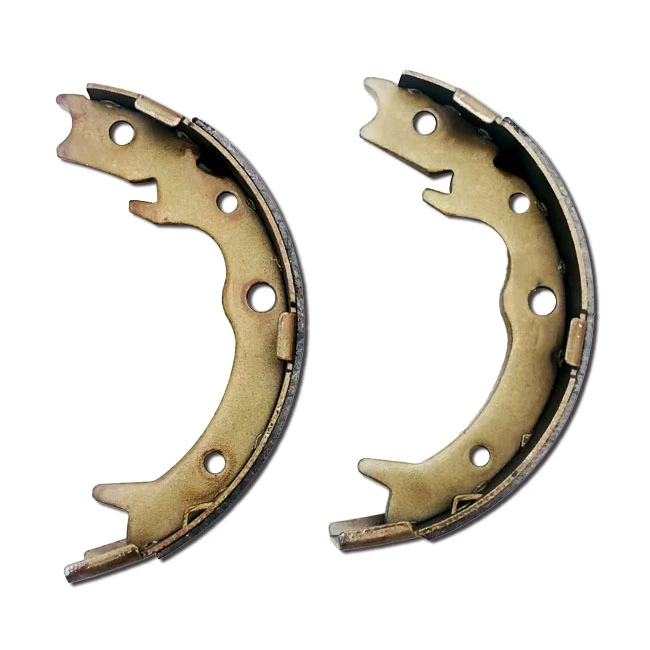
Before discussing low - temperature effects, it's essential to understand how rear brake shoes function in normal conditions. Rear brake shoes are a key component of a drum brake system, which is commonly used in the rear wheels of many vehicles. When the driver applies the brakes, hydraulic pressure is generated in the brake master cylinder. This pressure is then transferred through the brake lines to the wheel cylinders located in the drum brake assembly.
The wheel cylinders have pistons that, when pressurized, push the rear brake shoes against the inner surface of the brake drum. The friction between the brake shoes and the drum slows down the rotation of the wheel, ultimately bringing the vehicle to a stop. This simple yet effective mechanism relies on the proper interaction between the brake shoes' friction material and the drum surface.
Low - Temperature Challenges
Low - temperature environments present several challenges to the performance of rear brake shoes. One of the primary issues is the change in the physical properties of the friction material. Most brake shoe friction materials are designed to operate within a specific temperature range. When the temperature drops, the friction material can become harder and less flexible.
This change in hardness affects the coefficient of friction between the brake shoes and the drum. The coefficient of friction is a measure of how well two surfaces grip each other. In low - temperature conditions, the reduced flexibility of the friction material can lead to a lower coefficient of friction. As a result, the braking force generated by the rear brake shoes may be reduced, requiring the driver to apply more pressure on the brake pedal to achieve the same level of braking performance.
Another challenge is the potential for moisture to freeze on the brake components. In cold weather, moisture in the air can condense on the brake drums and brake shoes. If the temperature drops below freezing, this moisture can turn into ice. Ice on the brake surfaces can significantly reduce the friction between the brake shoes and the drum, making it difficult for the brakes to function properly.
How Our Rear Brake Shoes Overcome Low - Temperature Challenges
As a rear brake shoes supplier, we've invested a great deal of time and resources in developing products that can perform well in low - temperature environments. Our research and development team has focused on formulating friction materials that maintain their flexibility and high coefficient of friction even in cold conditions.
We use advanced materials and manufacturing processes to ensure that our Rear Brake Shoes have a consistent performance across a wide range of temperatures. For example, we incorporate special additives into the friction material that help to prevent it from becoming too hard in cold weather. These additives also enhance the material's ability to resist moisture absorption, reducing the risk of ice formation on the brake surfaces.
In addition, our brake shoes are designed with precision to ensure a proper fit within the drum brake assembly. A precise fit helps to maximize the contact area between the brake shoes and the drum, which is essential for generating sufficient braking force. Even in low - temperature conditions, our well - fitted brake shoes can maintain effective contact with the drum, providing reliable braking performance.
Case Studies: Real - World Performance in Low - Temperature Conditions
To demonstrate the effectiveness of our rear brake shoes in low - temperature environments, let's look at a few case studies. In a recent test conducted in a cold climate region, a fleet of commercial vehicles equipped with our rear brake shoes showed consistent braking performance over a long period. The drivers reported that they did not experience any significant reduction in braking power, even during extremely cold days.
Another case involved a group of private car owners in a mountainous area with cold winters. After switching to our BMW Rear Brake Shoes, they noticed a significant improvement in their vehicle's braking performance. The brakes responded more quickly and provided a more reliable stopping force, giving them greater confidence on the icy and snow - covered roads.
The Importance of Regular Maintenance in Low - Temperature Conditions
Even with high - quality rear brake shoes, regular maintenance is crucial in low - temperature environments. Moisture and salt from the roads can accumulate on the brake components, causing corrosion and reducing their performance over time. It's important to have the brake system inspected regularly, especially during the winter months.
During a brake inspection, a professional mechanic can check the condition of the rear brake shoes, the brake drums, and the wheel cylinders. They can also clean the brake components and apply anti - corrosion treatments if necessary. By keeping the brake system in good condition, you can ensure that your rear brake shoes continue to perform well in low - temperature conditions.
Other Related Products for Cold - Weather Braking
In addition to our rear brake shoes, we also offer other products that can enhance braking performance in low - temperature environments. Our Handbrake Pad is designed to work in conjunction with the rear brake shoes. The handbrake pad provides an additional braking force when the vehicle is parked, which is especially important on slippery surfaces.
The handbrake pad uses a similar friction material to our rear brake shoes, ensuring consistent performance in cold weather. It's also built to withstand the rigors of repeated use, making it a reliable choice for cold - climate driving.
Contact Us for Your Brake Shoe Needs
If you're looking for high - quality rear brake shoes that can perform well in low - temperature environments, look no further. As a leading rear brake shoes supplier, we're committed to providing our customers with the best products and services. Whether you're a vehicle manufacturer, a repair shop, or an individual car owner, we have the right brake shoes for your needs.
Contact us today to discuss your requirements and learn more about our product range. Our team of experts is ready to assist you in finding the perfect brake shoes for your vehicle. We can also provide you with technical support and advice on brake system maintenance. Don't let cold weather compromise your braking performance. Choose our rear brake shoes and drive with confidence in any temperature.
References
- "Automotive Brake Systems: Fundamentals, Diagnosis, and Service" by James D. Halderman
- "The Science of Friction Materials" by the Society of Automotive Engineers
- Industry research reports on brake performance in low - temperature environments