Hey there! As a car brake shoes supplier, I've been thinking a lot about the environmental impacts of these little but crucial parts. Let's dive right in and explore this topic.
First off, let's talk about the materials used in car brake shoes. Traditionally, many brake shoes were made with asbestos. Asbestos was great for its heat - resistant properties, but boy, was it bad for the environment and human health. When asbestos - containing brake shoes wore out, tiny asbestos fibers would be released into the air. These fibers are extremely dangerous when inhaled, as they can cause serious diseases like lung cancer and asbestosis. And once these fibers are in the environment, they're hard to get rid of. They can contaminate soil, water, and air for a long time.
Thankfully, most modern brake shoes don't use asbestos anymore. Instead, they're made from a variety of other materials such as semi - metallic compounds, ceramic materials, and organic materials.
Semi - metallic brake shoes are quite common. They're made with a mix of metals like steel, copper, and iron. While they offer good braking performance, the production of these metals has a significant environmental footprint. Mining these metals requires a lot of energy and water. For example, copper mining often involves large - scale open - pit mining, which can lead to habitat destruction, soil erosion, and water pollution. And when these semi - metallic brake shoes wear down, they release metal particles into the environment. These particles can end up in the soil and water, and some metals like copper can be toxic to aquatic life at high concentrations.
Ceramic brake shoes are another option. They're known for being quiet and having a long lifespan. The production of ceramic materials also has its environmental impacts. The raw materials for ceramics need to be mined, and the manufacturing process often requires high - temperature firing, which consumes a lot of energy. However, compared to semi - metallic brake shoes, ceramic brake shoes release fewer harmful particles when they wear. The particles they do release are generally less toxic and less likely to cause long - term environmental damage.
Organic brake shoes are made from materials like rubber, glass, and resin. The production of these materials also has an environmental cost. For example, the rubber industry can be associated with deforestation in some regions where rubber plantations are expanding. But on the plus side, organic brake shoes tend to produce less dust and fewer harmful emissions during normal use.
Now, let's talk about the end - of - life phase of car brake shoes. When brake shoes are worn out, they need to be replaced. If these old brake shoes aren't disposed of properly, they can cause a lot of environmental problems. For example, if they're dumped in landfills, the metals and other potentially harmful substances in them can leach into the soil and groundwater over time.
Recycling is a great solution, but it's not always easy. Different types of brake shoes require different recycling processes. Semi - metallic brake shoes can be recycled to recover the metals, but the process is complex and energy - intensive. Ceramic and organic brake shoes are even more challenging to recycle. There aren't as many established recycling methods for these materials yet.
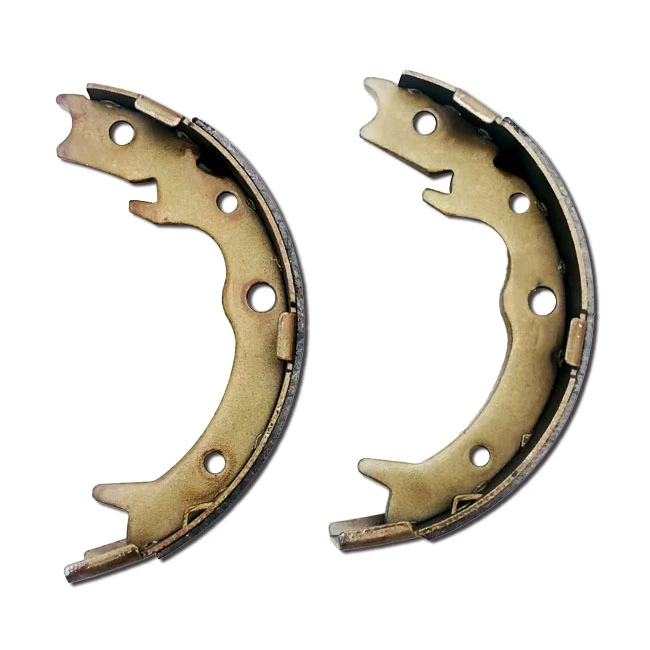

Another aspect to consider is the impact of brake shoe wear on air quality. Every time you step on the brakes, a small amount of brake shoe material is worn off and released into the air as dust. This brake dust can contribute to particulate matter pollution. Particulate matter, especially the fine particles, can be inhaled deep into the lungs and cause respiratory problems. In urban areas with a high volume of traffic, brake dust can be a significant contributor to poor air quality.
As a car brake shoes supplier, I'm always looking for ways to reduce the environmental impacts of our products. We're constantly researching and developing new materials and manufacturing processes. For example, we're exploring the use of more sustainable materials in our brake shoes. We're also working on improving the durability of our brake shoes so that they need to be replaced less often, which reduces waste.
If you're in the market for high - quality brake shoes, we've got a great selection. Check out our BMW Rear Brake Shoes, Handbrake Pad, and Rear Brake Shoes. We're committed to providing products that not only perform well but also have a lower environmental impact.
If you're interested in learning more about our brake shoes or want to start a procurement discussion, don't hesitate to reach out. We're here to answer all your questions and help you find the right brake shoes for your needs.
In conclusion, car brake shoes have a range of environmental impacts, from the production of the materials to the disposal of worn - out shoes and the release of particles during use. As an industry, we need to keep working towards more sustainable solutions. Whether it's through using more eco - friendly materials, improving recycling methods, or reducing the amount of brake dust released, every little bit helps in protecting our environment.
References
- "Environmental Impacts of the Automotive Industry" by various authors in automotive environmental research journals.
- "The Life Cycle Assessment of Brake Components" from industry - specific research reports.
- "Mining and the Environment" publications from environmental protection agencies.