The friction coefficient of rear brake shoes is a critical parameter that plays a pivotal role in the overall performance and safety of a vehicle's braking system. As a rear brake shoes supplier, understanding the significance of this coefficient is essential for providing high - quality products to our customers.
Fundamental Understanding of Friction Coefficient
The friction coefficient is a dimensionless value that represents the ratio of the frictional force between two surfaces in contact to the normal force pressing them together. In the context of rear brake shoes, it quantifies the ability of the brake shoe material to generate friction against the brake drum or disc when the braking system is engaged.
When the driver presses the brake pedal, hydraulic or mechanical forces are transferred to the rear brake shoes, which then press against the rotating brake drum or disc. The friction generated between the brake shoe and the drum/disc converts the kinetic energy of the moving vehicle into heat energy, thereby slowing down or stopping the vehicle. A higher friction coefficient means that more frictional force can be generated for a given normal force, resulting in more effective braking.
Impact on Braking Performance
One of the most significant aspects of the friction coefficient of rear brake shoes is its direct impact on braking performance. A well - calibrated friction coefficient ensures that the vehicle can stop within a reasonable distance under various driving conditions.
For example, in emergency braking situations, a rear brake shoe with an appropriate friction coefficient can quickly decelerate the vehicle, reducing the risk of collisions. If the friction coefficient is too low, the braking force will be insufficient, and the vehicle will take longer to stop. This can be extremely dangerous, especially at high speeds. On the other hand, if the friction coefficient is too high, it may cause the wheels to lock up, leading to a loss of steering control and an increased risk of skidding.
In normal driving conditions, a consistent friction coefficient is also crucial. It allows for smooth and predictable braking, providing a comfortable driving experience for the vehicle occupants. A fluctuating friction coefficient can result in jerky braking, which not only affects the comfort but also indicates potential problems with the brake shoes or the entire braking system.
Influence on Brake Wear
The friction coefficient also has a significant influence on the wear rate of rear brake shoes. When the friction coefficient is too high, the brake shoes will experience excessive wear because they are generating a large amount of frictional force against the brake drum or disc. This can lead to premature failure of the brake shoes, requiring more frequent replacements.
Conversely, a very low friction coefficient may cause the brake shoes to wear unevenly. Since the braking force is insufficient, the driver may need to apply more pressure on the brake pedal, which can cause some parts of the brake shoe to wear faster than others. This uneven wear can further degrade the braking performance and may also lead to noise and vibration during braking.
As a rear brake shoes supplier, we strive to develop brake shoes with an optimal friction coefficient that balances braking performance and wear resistance. By using advanced materials and manufacturing processes, we can ensure that our brake shoes have a stable friction coefficient over their service life, reducing the frequency of replacements and providing cost - effective solutions for our customers.
Compatibility with Other Braking System Components
The friction coefficient of rear brake shoes must be compatible with other components of the vehicle's braking system, such as the front brake pads, brake fluid, and the braking control system.
The front and rear brakes work together to provide balanced braking force. If the friction coefficient of the rear brake shoes is not properly matched with that of the front brake pads, it can lead to an imbalance in the braking force distribution. This can cause the vehicle to pull to one side during braking, which is a serious safety hazard.
The brake fluid is responsible for transmitting the braking force from the brake pedal to the brake shoes. The friction coefficient of the brake shoes can affect the pressure requirements in the braking system. If the friction coefficient is too high, the brake fluid may need to withstand higher pressures, which can put additional stress on the braking system components.
Modern vehicles are often equipped with advanced braking control systems, such as anti - lock braking systems (ABS) and electronic stability control (ESC). These systems rely on accurate and consistent braking forces to function properly. A rear brake shoe with an appropriate friction coefficient is essential for the effective operation of these safety systems.
Applications in Different Vehicle Types
The significance of the friction coefficient of rear brake shoes varies depending on the type of vehicle. For passenger cars, a moderate and consistent friction coefficient is usually required to provide smooth and reliable braking. BMW Rear Brake Shoes are designed to meet the specific requirements of BMW vehicles, ensuring optimal braking performance and compatibility with the vehicle's advanced braking systems.
In commercial vehicles, such as trucks and buses, the braking requirements are much more demanding. These vehicles are heavier and carry larger loads, so they need rear brake shoes with a higher friction coefficient to generate sufficient braking force. At the same time, the brake shoes must also be able to withstand high - temperature and high - pressure conditions during frequent braking.
For high - performance sports cars, the friction coefficient of rear brake shoes is carefully tuned to provide maximum braking performance while maintaining control. These vehicles often require brake shoes that can handle extreme braking forces without fading, allowing the driver to push the vehicle to its limits on the track.
Our Role as a Rear Brake Shoes Supplier
As a Rear Brake Shoes supplier, we are committed to providing high - quality brake shoes with an optimal friction coefficient. We invest heavily in research and development to understand the latest trends and technologies in the braking industry. Our team of experts conducts extensive testing and analysis to ensure that our brake shoes meet or exceed the industry standards.
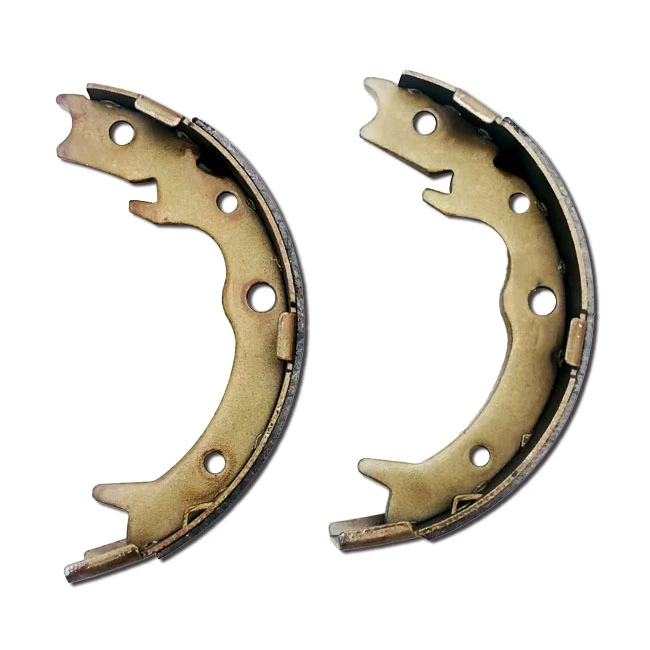
We also offer a wide range of rear brake shoes to meet the diverse needs of our customers. Whether it is for passenger cars, commercial vehicles, or high - performance sports cars, we have the right product for you. In addition to rear brake shoes, we also supply Handbrake Pad, which are an important part of the vehicle's parking brake system.
If you are in the market for high - quality rear brake shoes or handbrake pads, we invite you to contact us for more information. Our sales team is ready to assist you in finding the best products for your specific requirements. We look forward to the opportunity to work with you and provide you with the best braking solutions.

References
- Gillespie, T. D. (1992). Fundamentals of Vehicle Dynamics. Society of Automotive Engineers.
- Crolla, D. A. (2001). Vehicle Dynamics: Theory and Application. CRC Press.
- Heisler, H. (2002). Advanced Vehicle Technology. Butterworth - Heinemann.