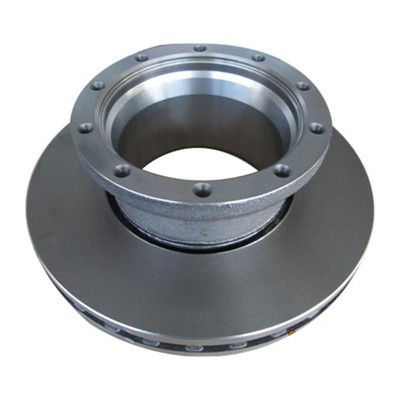
As a supplier of Volvo brake discs, I often receive inquiries from customers who have modified their Volvo engines and are wondering if they can install our brake discs. This is a crucial question that involves both safety and performance. In this blog post, I'll delve into the factors you need to consider when making this decision.
Understanding the Basics of Brake Discs and Modified Engines
Before we discuss the compatibility of Volvo brake discs with modified engines, let's first understand the role of brake discs. Brake discs are a key component of a vehicle's braking system. When you press the brake pedal, the brake pads clamp down on the brake discs, creating friction that slows down or stops the rotation of the wheels.
A modified engine, on the other hand, can significantly alter the performance characteristics of a vehicle. Engine modifications can increase horsepower, torque, and speed, which in turn can put additional stress on the braking system. For example, if you've increased the engine's power output, your vehicle will be able to accelerate more quickly. This means that when you need to stop, the brakes will have to work harder to bring the vehicle to a halt.
Compatibility Factors
1. Brake Disc Size and Design
The size and design of the brake discs are crucial for compatibility. Volvo vehicles come with different brake disc sizes depending on the model and trim level. When you modify your engine, you may need to upgrade to larger brake discs to handle the increased stopping power required. Larger brake discs have a greater surface area, which allows for more heat dissipation and better braking performance.
Our Volvo brake discs are designed to meet the specific requirements of different Volvo models. We offer a range of sizes and designs to ensure that you can find the right brake discs for your vehicle, even if it has a modified engine. However, it's important to note that simply installing larger brake discs may not be enough. You also need to consider other factors such as the brake calipers, brake pads, and the overall braking system design.
2. Heat Dissipation
One of the biggest challenges when using a modified engine is heat management. The increased power output of a modified engine can generate more heat during braking. If the brake discs are unable to dissipate this heat effectively, it can lead to brake fade, which is a reduction in braking performance.
Our Volvo brake discs are made from high-quality materials that are designed to dissipate heat quickly. We use advanced manufacturing techniques to ensure that the brake discs have a uniform structure and good thermal conductivity. This helps to prevent brake fade and ensures consistent braking performance, even under extreme conditions.
3. Brake System Integration
The braking system of a vehicle is a complex system that includes the brake discs, brake calipers, brake pads, and the hydraulic system. When you modify your engine, it's important to ensure that all the components of the braking system are properly integrated.
For example, if you upgrade to larger brake discs, you may also need to upgrade the brake calipers to ensure that they can apply enough pressure to the brake discs. Our team of experts can provide you with advice on how to integrate our Volvo brake discs with your existing braking system, taking into account any modifications you've made to your engine.
Case Studies
Let's take a look at some real-world examples of customers who have installed our Volvo brake discs on vehicles with modified engines.
Case Study 1: Volvo S60 with a Turbocharged Engine Upgrade
A customer had a Volvo S60 with a turbocharged engine upgrade. The original brake discs were struggling to handle the increased stopping power required. After consulting with our team, the customer decided to install our larger-sized Volvo brake discs. The new brake discs provided better heat dissipation and improved braking performance. The customer reported that the vehicle now stops more quickly and smoothly, even at high speeds.
Case Study 2: Volvo XC90 with a Performance Tuned Engine
Another customer had a Volvo XC90 with a performance tuned engine. The customer was experiencing brake fade during aggressive driving. We recommended our high-performance Volvo brake discs, which are designed to handle extreme conditions. After installation, the customer noticed a significant improvement in braking performance. The brake fade issue was resolved, and the vehicle now has more reliable braking.
Other Considerations
1. Legal Requirements
Before making any modifications to your vehicle, it's important to check the legal requirements in your area. Some regions have strict regulations regarding vehicle modifications, including changes to the braking system. Make sure that any modifications you make to your vehicle comply with the local laws.
2. Warranty
When you install our Volvo brake discs on a vehicle with a modified engine, it's important to understand the warranty terms. Our brake discs come with a warranty, but certain modifications to the vehicle may void the warranty. Make sure to read the warranty terms carefully and consult with our team if you have any questions.
Conclusion
In conclusion, it is possible to install Volvo brake discs on a Volvo with a modified engine, but it requires careful consideration of several factors. Our Volvo brake discs are designed to provide high-quality braking performance, but you need to ensure that they are compatible with your modified engine and the rest of the braking system.
If you're considering installing our Volvo brake discs on your modified Volvo, we encourage you to contact us for more information. Our team of experts can help you choose the right brake discs for your vehicle and provide you with advice on installation and integration. We also offer a wide range of other brake discs, such as Mercedes Brake Disc, Mercedes-Benz Brake Disc, and AUDI Brake Disc.
Don't hesitate to reach out to us if you have any questions or if you're interested in purchasing our brake discs. We're here to help you ensure the safety and performance of your vehicle.

References
- "Automotive Braking Systems: Fundamentals, Modeling, and Control." By Lars Eriksson and Lars Nielsen.
- "Vehicle Dynamics and Control." By Rajesh Rajamani.