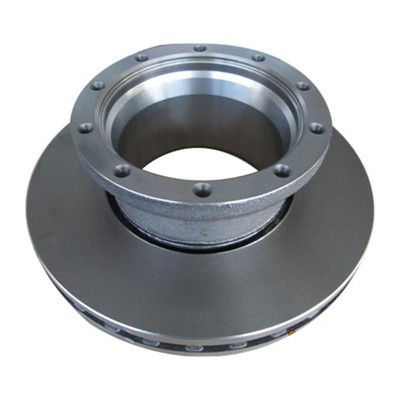
Calculating the braking distance related to car brake discs is a crucial aspect for both drivers and automotive enthusiasts. As a car brake disc supplier, I understand the significance of this calculation in ensuring safety on the road. In this blog post, I will delve into the factors that influence braking distance and provide a step-by-step guide on how to calculate it.
Factors Affecting Braking Distance
Before we dive into the calculation, it's essential to understand the various factors that can impact the braking distance of a vehicle. These factors include:
- Vehicle Speed: The higher the speed of the vehicle, the longer the braking distance will be. This is because the kinetic energy of the vehicle increases with speed, and more energy needs to be dissipated to bring the vehicle to a stop.
- Vehicle Weight: Heavier vehicles require more force to stop, resulting in a longer braking distance. This is why trucks and buses have longer braking distances compared to smaller cars.
- Brake System Efficiency: The efficiency of the brake system, including the brake discs, pads, and calipers, plays a significant role in determining the braking distance. A well-maintained and high-quality brake system will provide better stopping power and shorter braking distances.
- Road Conditions: The condition of the road surface, such as wet, icy, or gravel, can affect the friction between the tires and the road, leading to longer braking distances.
- Tire Condition: Worn-out or underinflated tires can reduce the traction between the tires and the road, increasing the braking distance.
Understanding Brake Discs
Brake discs, also known as rotors, are an essential component of the vehicle's braking system. They work in conjunction with the brake pads to slow down or stop the vehicle. When the brake pedal is pressed, the brake calipers squeeze the brake pads against the brake discs, creating friction that converts the kinetic energy of the vehicle into heat energy, which is then dissipated into the air.
As a car brake disc supplier, I offer a wide range of brake discs to suit different vehicle makes and models. Our Modified Brake Disc are designed for high-performance vehicles and offer improved braking performance and durability. We also provide Mercedes-Benz Brake Disc and Chevy Brake Discs that are specifically tailored to meet the requirements of these popular vehicle brands.
Calculating Braking Distance
The braking distance of a vehicle can be calculated using the following formula:
[d = \frac{v^2}{2 \mu g}]
Where:


- (d) is the braking distance in meters
- (v) is the initial velocity of the vehicle in meters per second
- (\mu) is the coefficient of friction between the tires and the road
- (g) is the acceleration due to gravity, which is approximately 9.81 m/s²
To use this formula, you need to know the initial velocity of the vehicle and the coefficient of friction between the tires and the road. The initial velocity can be obtained from the speedometer of the vehicle, while the coefficient of friction depends on the road conditions and the type of tires.
Here's a step-by-step guide on how to calculate the braking distance:
- Determine the initial velocity ((v)): Convert the speed of the vehicle from kilometers per hour (km/h) to meters per second (m/s) by dividing the speed by 3.6. For example, if the vehicle is traveling at 60 km/h, the initial velocity in m/s would be (60 \div 3.6 = 16.67) m/s.
- Determine the coefficient of friction ((\mu)): The coefficient of friction between the tires and the road can vary depending on the road conditions. Here are some typical values for different road surfaces:
- Dry asphalt: (\mu = 0.7 - 0.9)
- Wet asphalt: (\mu = 0.4 - 0.6)
- Icy road: (\mu = 0.1 - 0.2)
- Gravel road: (\mu = 0.3 - 0.5)
- Calculate the braking distance ((d)): Plug the values of (v), (\mu), and (g) into the formula and solve for (d). For example, if the vehicle is traveling at 16.67 m/s on dry asphalt with a coefficient of friction of 0.8, the braking distance would be:
[d = \frac{(16.67)^2}{2 \times 0.8 \times 9.81} \approx 17.6] meters
Importance of Calculating Braking Distance
Calculating the braking distance is essential for several reasons:
- Safety: By knowing the braking distance of your vehicle, you can maintain a safe following distance from the vehicle in front of you, reducing the risk of collisions.
- Vehicle Maintenance: Understanding the factors that affect braking distance can help you identify potential issues with your vehicle's brake system and take appropriate measures to maintain its performance.
- Driving Skills: Knowing how to calculate the braking distance can improve your driving skills and help you make better decisions on the road, especially in emergency situations.
Conclusion
Calculating the braking distance related to car brake discs is a valuable skill that can enhance your safety on the road. By understanding the factors that affect braking distance and using the appropriate formula, you can estimate the stopping distance of your vehicle under different conditions.
As a car brake disc supplier, I am committed to providing high-quality brake discs that offer reliable performance and safety. Whether you need Modified Brake Disc, Mercedes-Benz Brake Disc, or Chevy Brake Discs, we have the right solution for your vehicle.
If you are interested in purchasing our brake discs or have any questions about braking distance calculation, please feel free to contact us for a procurement discussion. We look forward to serving you and helping you ensure the safety and performance of your vehicle.
References
- "Automotive Braking Systems" by John C. Dixon
- "Vehicle Dynamics and Control" by Rajesh Rajamani