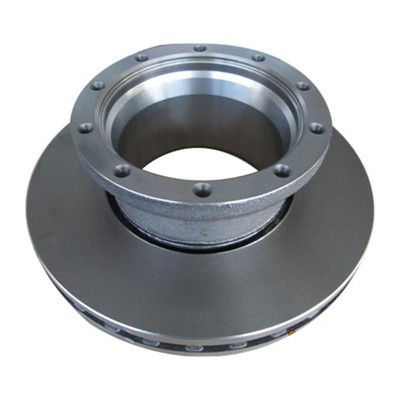
Hey there, car enthusiasts and fellow gearheads! I'm stoked to be here with you today to talk about one of the most critical components in any high - performance vehicle: the Audi brake disc. As a proud supplier of Audi brake discs, I've got a ton of insider knowledge to share, so let's dive right in!
First off, let's understand why brake discs are so important. When you're cruising down the highway at top speed or taking sharp corners on a race track, the ability to stop your vehicle quickly and safely is non - negotiable. That's where brake discs come in. They're the part of the braking system that the brake pads clamp down on to slow or stop your car. So, choosing the right material for these discs can make all the difference in your driving experience.
Cast Iron
The most common material for Audi brake discs, and for brake discs in general, is cast iron. It's been around for ages and is still a top choice for many reasons. Cast iron is incredibly durable. It can withstand high temperatures generated during braking without warping or cracking easily. This is super important because when you're braking hard, the friction between the brake pads and the disc creates a ton of heat.
Another great thing about cast iron is that it's relatively inexpensive to produce. This means that Audi can offer reliable braking performance at a reasonable cost to consumers. Cast iron also has good braking performance right out of the box. It provides a smooth and consistent feel when you press the brake pedal, giving you confidence on the road.
However, cast iron does have its drawbacks. It's quite heavy, which can add to the overall weight of the vehicle. And over time, it can rust if it's exposed to moisture, especially in areas with harsh weather conditions. But don't worry, Audi has come up with some clever solutions to mitigate these issues, like using special coatings on the discs.
Carbon - Ceramic
Now, if you're looking for the ultimate in high - performance braking, carbon - ceramic brake discs are the way to go. These are often found on Audi's high - end and performance models, like the R8. Carbon - ceramic discs are made from a composite material that consists of carbon fibers embedded in a ceramic matrix.
The big advantage of carbon - ceramic discs is their weight. They're significantly lighter than cast iron discs. This means less unsprung weight for the vehicle, which improves handling, acceleration, and fuel efficiency. When you're zipping around a race track, every little bit of weight reduction counts.
They also have excellent heat resistance. Carbon - ceramic discs can handle extremely high temperatures without losing their braking performance. This is crucial in high - speed or high - performance driving situations where the brakes are under a lot of stress. Unlike cast iron, they don't fade easily, so you can brake hard, again and again, without worrying about a decrease in stopping power.
But there's a catch. Carbon - ceramic brake discs are a lot more expensive to produce than cast iron ones. This translates to a much higher price tag for the consumer. They also require more careful handling and maintenance. For example, they need to be heated up to a certain temperature before they can provide their optimal braking performance.
Composite
Composite brake discs are another option that's gaining popularity in the automotive industry, and Audi is no exception. These discs are made by combining different materials to get the best of both worlds.
One common type of composite disc combines a cast iron friction surface with an aluminum hat or hub. The cast iron provides the reliable braking performance and wear resistance that we're used to, while the aluminum hub reduces the overall weight of the disc. This combination results in a disc that offers good performance at a more reasonable cost compared to fully carbon - ceramic discs.
Composite discs also have better thermal management than traditional cast iron discs. The aluminum hub helps to dissipate heat more efficiently, which can prevent the disc from overheating and warping. This is especially beneficial in stop - and - go traffic or during long - distance driving.
Other Options
There are also some other materials that are being explored for brake disc applications. For example, some manufacturers are looking into using advanced steel alloys. These alloys can offer improved strength and wear resistance compared to traditional cast iron. They might also be more corrosion - resistant, which is a big plus.
Another emerging technology is the use of link text: Toyota Floating Carbon BrakeDiscs. Although not directly Audi, it gives an idea of the innovation happening in the industry. Floating carbon brake discs have a design where the friction ring is attached to the hub in a way that allows it to expand and contract independently. This can improve heat dissipation and reduce the risk of warping.
Comparison with Other Brands
Now, let's talk about how Audi brake discs stack up against other brands. If you're familiar with link text: Ford Brake Discs or link text: BMW Brake Disc, you'll know that each brand has its own approach to braking technology.
Audi, like BMW, focuses on a blend of performance and luxury. Their brake discs are designed to provide a smooth and responsive braking experience, whether you're driving a daily commuter or a high - performance sports car. Ford, on the other hand, often emphasizes durability and affordability, especially in their mainstream models.
However, Audi's use of advanced materials like carbon - ceramic and composite discs gives them an edge in terms of high - performance applications. These materials allow Audi to achieve better braking performance, reduced weight, and improved heat management compared to some of their competitors.


As a supplier of Audi brake discs, I can tell you that we're constantly working on improving our products. We're researching new materials, refining manufacturing processes, and collaborating with Audi's engineering teams to ensure that our brake discs meet the highest standards of quality and performance.
If you're in the market for Audi brake discs, or if you're just curious to learn more, I'd love to have a chat with you. Whether you're a car enthusiast looking to upgrade your vehicle's braking system or a professional mechanic sourcing parts for your shop, I'm here to help. Drop me a line and we can talk about the best options for your specific needs. Let's make sure your Audi stops as good as it goes!
References
- "Automotive Brake Systems: Fundamentals, Modeling, and Evaluation" by Reiner Hoffmann
- Various technical papers published by Audi on automotive braking technology.