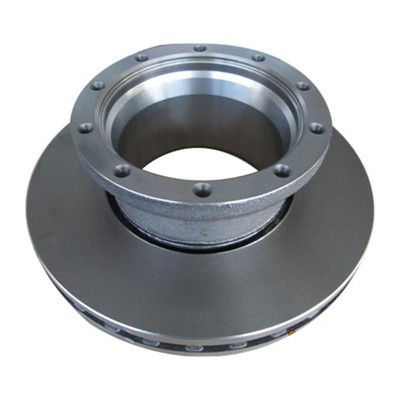
Hey there! As a supplier of truck brake discs, I often get asked about the resurfacing process for these crucial components. So, let's dive right in and break it down.
First off, why would you even need to resurface a truck brake disc? Well, over time, brake discs go through a lot of wear and tear. Every time you hit the brakes, friction is generated between the brake pads and the disc. This friction is what slows down your truck, but it also causes the surface of the disc to become uneven. You might end up with grooves, ridges, or even hot spots. These irregularities can lead to reduced braking performance, vibrations, and noise. Resurfacing the brake disc restores its smooth surface, ensuring better contact with the brake pads and, ultimately, safer driving.
Now, let's talk about the actual resurfacing process. It's a multi - step operation that requires the right tools and expertise.
Step 1: Inspection
Before you start resurfacing, you've got to give the brake disc a thorough once - over. Check for any signs of extreme wear, cracks, or damage that might make resurfacing impossible. If the disc is too thin, beyond the manufacturer's minimum thickness specification, it's not safe to resurface it. You'll need to replace it instead. This is a critical step because using a resurfaced disc that's too thin can lead to brake failure, and that's a huge no - no.
Step 2: Cleaning
Once you've determined that the disc can be resurfaced, the next step is to clean it. Brake discs can accumulate dirt, grease, and brake dust over time. Cleaning the disc removes these contaminants, allowing for a more accurate resurfacing process. You can use a degreaser and a wire brush to get rid of the gunk. Make sure to clean both sides of the disc thoroughly.


Step 3: Mounting on the Lathe
The heart of the resurfacing process is using a lathe. A lathe is a machine that rotates the brake disc at a high speed while a cutting tool shaves off a thin layer of metal from the surface. First, you need to mount the brake disc securely on the lathe. This is crucial because any wobbling or misalignment can result in an uneven surface. Most modern lathes are designed to handle truck brake discs of various sizes, but you still need to make sure it's properly centered.
Step 4: Cutting
Once the disc is mounted, it's time to start cutting. The cutting tool on the lathe is carefully adjusted to remove just the right amount of material. You don't want to take off too much, as that can make the disc too thin. But you also need to remove enough to get rid of the grooves and irregularities. The operator has to be really skilled here, constantly monitoring the cutting process to ensure a smooth and even surface. This might take a few passes of the cutting tool to get it just right.
Step 5: Measuring
After cutting, it's essential to measure the thickness of the brake disc again. You want to make sure it's still within the safe range. You can use a micrometer or a caliper to take accurate measurements. If the disc is still within the manufacturer's specified thickness, it's a good sign that the resurfacing was successful.
Step 6: Finishing
Once the cutting is done and the measurements are okay, the next step is finishing. This involves smoothing out the surface of the disc to remove any rough edges left by the cutting process. You can use a fine - grit sandpaper or a polishing compound to give the disc a nice, smooth finish. A smooth surface is important because it helps the brake pads make better contact with the disc, improving braking performance.
Step 7: Final Inspection
Before the resurfaced brake disc is ready to go back on the truck, it needs one last inspection. Check for any remaining defects, make sure the surface is smooth and even, and verify that the thickness is within the acceptable range. This final inspection is like a quality control check to ensure that the resurfaced disc meets all the necessary standards.
Now, you might be wondering about the benefits of resurfacing a truck brake disc. Well, it's a cost - effective alternative to replacing the entire disc. Buying a new brake disc can be expensive, especially for heavy - duty trucks. Resurfacing allows you to extend the life of the existing disc, saving you money in the long run. It also helps maintain the performance of your braking system. A resurfaced disc provides better braking power, reduces vibrations and noise, and improves overall safety.
At our company, we offer high - quality truck brake discs that are suitable for resurfacing. Whether you're looking for Heavy Duty Vehicle Brake Discs, Heavy Commercial Vehicle Brake Discs, or Commercial Truck Brake Discs, we've got you covered. Our brake discs are made from top - notch materials and are designed to withstand the rigors of heavy - duty use.
If you're in the market for truck brake discs or have questions about the resurfacing process, don't hesitate to reach out. We're here to help you make the best decision for your truck's braking system. Whether you're a fleet manager, a truck mechanic, or an individual truck owner, we can provide you with the right products and expert advice. Contact us today to start a discussion about your brake disc needs. We're eager to work with you and ensure that your trucks are equipped with the best - performing brake discs.
References
- Brake System Handbook, Industry Standard Publication
- Manufacturer's Guidelines for Truck Brake Discs