In the intricate world of automotive engineering, every component plays a crucial role in ensuring the safety and performance of a vehicle. One such component that often goes unnoticed but is of utmost importance is the return spring in car brake shoes. As a leading supplier of car brake shoes, I have witnessed firsthand the significance of this small yet powerful part. In this blog post, I will delve into the role of the return spring in car brake shoes, its importance, and how it contributes to the overall functionality of the braking system.

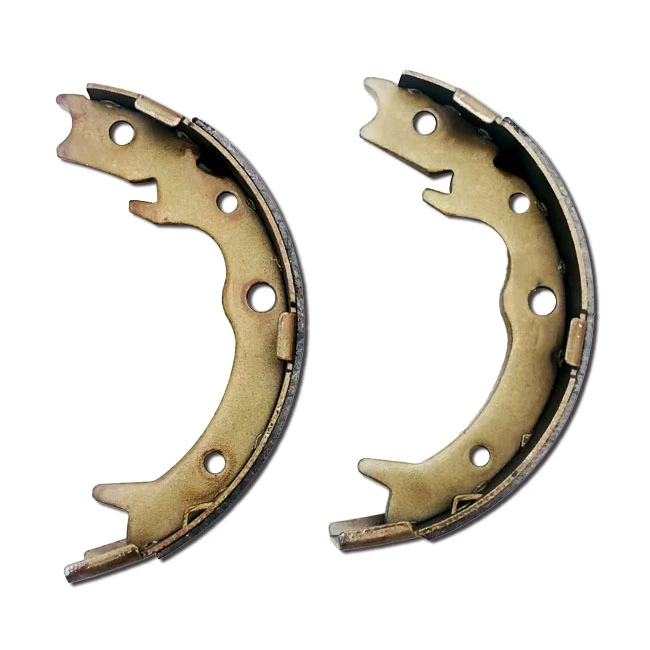
Understanding the Basics of Car Brake Shoes
Before we dive into the role of the return spring, let's first understand the basics of car brake shoes. Brake shoes are a key component of a drum brake system, which is commonly found in the rear wheels of many vehicles. When the driver presses the brake pedal, hydraulic pressure is applied to the brake shoes, causing them to expand and press against the inner surface of the brake drum. This friction between the brake shoes and the drum slows down the rotation of the wheels, ultimately bringing the vehicle to a stop.
The Role of the Return Spring
The return spring in car brake shoes serves a critical function in the operation of the braking system. Its primary role is to retract the brake shoes back to their original position after the driver releases the brake pedal. This ensures that the brake shoes do not remain in contact with the brake drum when the brakes are not being applied, preventing unnecessary wear and tear on the braking components and reducing fuel consumption.
When the brake pedal is pressed, the hydraulic pressure forces the brake shoes to expand and make contact with the brake drum. Once the driver releases the brake pedal, the hydraulic pressure is released, and the return spring comes into action. The spring exerts a pulling force on the brake shoes, causing them to retract and move away from the brake drum. This retraction process is essential for maintaining the proper clearance between the brake shoes and the drum, which is necessary for smooth and efficient braking performance.
Importance of the Return Spring
The return spring plays a vital role in the safety and reliability of the braking system. Here are some key reasons why the return spring is so important:
- Prevents Brake Drag: One of the main functions of the return spring is to prevent brake drag, which occurs when the brake shoes remain in contact with the brake drum even when the brakes are not being applied. Brake drag can cause excessive heat buildup in the braking system, leading to premature wear and tear on the brake shoes, brake drum, and other braking components. It can also reduce fuel efficiency and increase the risk of brake failure. By retracting the brake shoes back to their original position, the return spring helps to prevent brake drag and ensure that the brakes operate smoothly and efficiently.
- Maintains Proper Brake Clearance: The return spring helps to maintain the proper clearance between the brake shoes and the brake drum. This clearance is necessary for the brake shoes to expand and make contact with the drum when the brakes are applied, as well as for the shoes to retract and move away from the drum when the brakes are released. If the clearance is too small, the brake shoes may not retract fully, leading to brake drag. If the clearance is too large, the brakes may not engage properly, resulting in reduced braking performance. The return spring ensures that the brake shoes are always positioned correctly, maintaining the optimal clearance for efficient braking.
- Enhances Braking Performance: A properly functioning return spring is essential for optimal braking performance. By ensuring that the brake shoes retract quickly and smoothly after the brakes are released, the return spring allows the brakes to respond promptly when the driver presses the brake pedal again. This improves the overall responsiveness and effectiveness of the braking system, reducing the stopping distance and enhancing the safety of the vehicle.
Types of Return Springs
There are several types of return springs used in car brake shoes, each designed to meet the specific requirements of different braking systems. The most common types of return springs include:
- Single Coil Spring: This is the simplest and most common type of return spring. It consists of a single coil of wire that is wound around a central axis. The single coil spring is typically used in smaller vehicles and light-duty applications.
- Double Coil Spring: The double coil spring is similar to the single coil spring, but it has two coils of wire wound around the same central axis. This design provides greater strength and durability, making it suitable for larger vehicles and heavy-duty applications.
- Torsion Spring: A torsion spring is a type of spring that works by twisting or rotating around its axis. It is commonly used in drum brake systems to provide the necessary retracting force for the brake shoes. Torsion springs are known for their high strength and reliability, making them a popular choice for automotive applications.
Signs of a Faulty Return Spring
Like any other component in the braking system, the return spring can wear out or become damaged over time. Here are some signs that indicate a faulty return spring:
- Brake Drag: If you notice that your vehicle's brakes are dragging or sticking, it could be a sign of a faulty return spring. Brake drag can cause the brakes to overheat, leading to premature wear and tear on the braking components and reduced fuel efficiency.
- Uneven Brake Wear: A faulty return spring can cause uneven wear on the brake shoes. If one brake shoe is wearing more quickly than the other, it could be due to a problem with the return spring on that side of the vehicle.
- Poor Braking Performance: If you experience a decrease in braking performance, such as longer stopping distances or a spongy brake pedal, it could be a sign of a faulty return spring. A worn or damaged return spring may not be able to retract the brake shoes properly, resulting in reduced braking efficiency.
- Noise: A faulty return spring can sometimes produce a rattling or clicking noise when the brakes are applied or released. This noise is usually caused by the spring vibrating or moving out of position.
If you notice any of these signs, it is important to have your vehicle's braking system inspected by a qualified mechanic as soon as possible. A faulty return spring can compromise the safety and performance of your vehicle, so it is essential to address the issue promptly.
Conclusion
In conclusion, the return spring in car brake shoes plays a crucial role in the operation of the braking system. Its primary function is to retract the brake shoes back to their original position after the driver releases the brake pedal, preventing brake drag, maintaining proper brake clearance, and enhancing braking performance. As a car brake shoes supplier, we understand the importance of using high-quality return springs in our products to ensure the safety and reliability of the braking system.
If you are in the market for BMW Rear Brake Shoes, Rear Brake Shoes, or Handbrake Pad, we invite you to contact us for more information. Our team of experts is dedicated to providing you with the highest quality brake shoes and components at competitive prices. We look forward to the opportunity to work with you and help you find the perfect braking solution for your vehicle.
References
- Bosch Automotive Handbook, 8th Edition
- Chilton's Automotive Repair Manuals
- Haynes Repair Manuals